
Edible Himalayan Salt: What Buyers Should Know Before Choosing a Salt

Buying salt sounds simple, right? But once you start looking at different Himalayan salt options, the choice can get a little confusing. You may come across pink, white, and black varieties, different grain sizes, and several packaging options. The real question is not just which salt looks good. It is about finding one that actually suits the way you plan to use it. A restaurant, retailer, food manufacturer, and home buyer may all have different requirements. In this guide, we’ll take a closer look at edible Himalayan salt, how its main varieties differ, what you can use them for, and what to check before choosing a supplier.
What Is Edible Himalayan Salt?
Salt may look like a simple kitchen ingredient. But not every salt product serves the same purpose. Himalayan edible salt comes from natural rock salt deposits in the Punjab region of Pakistan. It is processed for culinary use. The raw crystals are cleaned and crushed first. Different sizes are produced during grading. Smaller grains are easy to mix into recipes, while bigger pieces are often chosen for grinding or finishing dishes. There is one thing buyers should keep in mind. Not every Himalayan salt product is meant for eating. The same salt is also used for lamps, candle holders, bricks, bath salts, and other products. Always check the product specifications before buying salt for consumption.
- Common Forms of Edible Himalayan Salt
| Salt Form | Appearance | Common Uses |
| Fine Salt | Small, smooth particles | Cooking, seasoning, sauces, food preparation. |
| Granules | Medium-sized grains | Table seasoning, spice blends, food processing. |
| Coarse Salt | Larger visible crystals | Grilling, cooking, finishing dishes. |
| Salt Chunks | Large natural pieces | Grinding, specialty cooking, further processing. |
Which Edible Himalayan Salt Should You Choose?
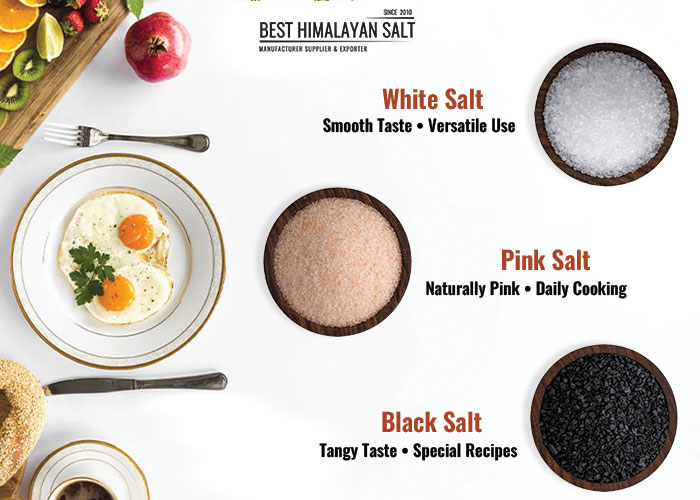
Choosing the right edible Himalayan salt depends on how you plan to use it. Pink, white, and black salt each have a different taste, appearance, and role in the kitchen, so the right choice depends on what you are preparing.
- Pink Himalayan Salt
The soft pink color is what makes this variety easy to recognize. Pink Himalayan salt can range from very light pink to deeper rosy shades. Natural variation is normal, so the color may not look the same in every batch. Fine grains are a convenient choice for everyday cooking and seasoning. Coarser crystals can be used when a little more texture is preferred. This is why Himalayan pink salt is found in everything from kitchen packs to food-service products.
- White Himalayan Salt
Some buyers prefer salt with a lighter, cleaner appearance. Himalayan white salt ranges from white to slightly translucent and has a more neutral appearance than pink varieties. It is available in both fine and coarse forms to suit different culinary and commercial needs. Fine grains mix easily into recipes, while larger crystals can be used for applications where a more noticeable grain size is preferred.
- Black Himalayan Salt
If flavor is an important factor when choosing a salt, black salt offers a distinctive option. Himalayan black salt has a savory taste with a sulfur-like aroma that gives dishes a unique character. It is especially common in South Asian cooking and is often used in chutneys, salads, spice blends, fruit chaat, and other recipes where its particular flavor is desired. For many buyers, this distinctive taste is the main reason to choose it.
How to Choose the Right Himalayan Salt Supplier
Choosing the right salt starts with knowing what you actually need. A restaurant, food manufacturer, retailer, or importer may all buy Himalayan salt, but their requirements can be quite different. Looking at a few practical details first can make the choice much easier.
- Intended Use
Before choosing a salt, think about where it will end up. If you are buying it for your own kitchen, the choice is fairly simple. For a business, things can be different because the salt may become part of a food product, retail pack, or restaurant menu. Knowing this from the start makes the rest of the selection easier.
- Choose the Grain Size
Grain size affects how the salt dissolves and how it works in different applications. Fine, medium, and coarse grains each have their own uses. A Himalayan salt supplier should be able to provide the size that matches your specific application.
- Color and Texture
Color and texture become more noticeable when salt is sold in clear packaging or used as a finishing ingredient. Pink, white, and black Himalayan salt each have a different natural appearance. The texture can also range from fine crystals to larger grains, so choose according to how you want the finished product to look and feel.
- Check Food-Grade Details
For edible salt, product specifications should be clear before you place an order. Check the available food-grade information and documentation required for your market. A reliable Himalayan salt manufacturer should be able to provide these details without making the buyer search for basic product information.
- Check Quality Consistency
Consistency matters most when you plan to reorder. If the first shipment has the right color and grain but the next one looks noticeably different, it can create problems for a retail or food product. An experienced Himalayan salt exporter should have processes in place to keep product characteristics consistent between batches. Taking these points into account gives you a more practical way to compare suppliers. Instead of looking at price alone, you can judge whether the salt, specifications, and supply capability actually fit your business needs.
Frequently Asked Questions (FAQs)
Is Himalayan salt edible?
Yes, food-grade Himalayan salt is suitable for eating. It can be used in cooking, seasoning, and grilling. Always check that the product is specifically intended for food use.
What is better than Himalayan salt?
There is no single salt that is better for everyone. Himalayan salt, sea salt, and table salt are all mainly made of sodium chloride. The better choice depends on your cooking needs, flavor preference, and intended use.
What should buyers check before purchasing Himalayan salt?
Look at the salt variety, grain size, food-grade status, packaging, quantity, and supplier specifications. For commercial orders, it is also useful to ask about documentation and export requirements.
How do you eat Himalayan salt?
You can use it much like regular table salt. Add it while cooking or sprinkle a small amount over finished dishes. It can also be used in seasoning blends and other recipes.
Can Himalayan salt be bought in bulk?
Yes, bulk Himalayan salt is available for restaurants, food manufacturers, retailers, distributors, and other businesses. Buyers can usually choose from different grain sizes and packaging options based on their requirements. Order quantities and available packaging formats may vary by supplier.
Conclusion
The best Himalayan salt is not always about choosing the most popular color or the lowest price. It comes down to finding a variety, grain size, and quality that fit the way you plan to use it. Pink, white, and black Himalayan salts each have their own place, while fine, coarse, and chunk forms serve different culinary and commercial needs. For businesses, the decision goes a little further. Food-grade specifications, consistent quality, suitable packaging, documentation, and reliable supply can make a real difference when ordering regularly. If you are looking for Himalayan salt wholesale, choosing a supplier that can match your required specifications and quantities can help make future orders much easier.
Get Edible Himalayan Salt for Your Requirements
Need a dependable source for Himalayan pink salt wholesale? We supply edible Himalayan salt in different grades and quantities for retailers, food businesses, and distributors. If you need bulk Himalayan pink salt, custom packaging, or private label products, your requirements can be discussed before placing an order.
Get in touch with your requirements, and we can help you choose the right salt, packaging, and quantity for your market.